Saturday, January 11, 2014
Sweet Dream Come True: A long-awaited chat with Eurythmics’ Dave Stewart
At a time when MTV was churning out cookie-cutter bands, Eurythmics broke the mold with Annie Lennox’s gender-bending appearance, Dave Stewart’s synth-driven creativity and the unique sound that resulted (“icy cold European music with a soulfulness about it,” as he puts it).
I was Member No. 966 of their U.S. fan club. I exchanged lengthy letters with pen pals across the continent. Their 1986 gig at Memorial Coliseum was my first concert ever.
But as a sexually confused teenager, I kept quiet about my fanaticism for fear of drawing extra attention to myself. This was during middle school in Salem, and I wanted to blend in, not stand out.
When I finally decided to “come out” as a Eurythmite during high school, it was a liberating experience that gave me an early indication of what it feels like to be true to yourself. As a suicidal adolescent, I felt empowered by these lyrics from “You Have Placed a Chill in My Heart”: “Don’t cut me down when I’m talking to you, ’cause I’m much too tall to feel that small.”
Before long, my hopeless devotion to Dave and Annie became common knowledge among friends. I even quoted from “The King and Queen of America” in my 1990 commencement address: “We’re gonna build a little satellite, we’re gonna make it fly…and all of them aliens are gonna find out who we are.”
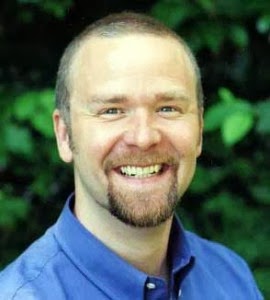
So you can only imagine my excitement at the opportunity to interview Stewart, who called to discuss his latest endeavor, The Dave Stewart Songbook—Volume One, an ambitious career retrospective for which he assembled a 30-piece “Rock Fabulous Orchestra” to reinterpret his vast catalog. The two-disc set includes songs from his underrated solo material (including the instrumental hit “Lily Was Here,” featuring a memorable sax line from Candy Dulfer), his writing/producing collaborations (Tom Petty, Sinéad O’Connor, Mick Jagger) and his series of dynamic duos: Eurythmics (with Lennox), Vegas (with The Fun Boy Three’s Terry Hall) and Platinum Weird (with incoming American Idol judge Kara DioGuardi). The infamous multitasker is not only taking the show on the road, but he’s also written an accompanying coffee table book filled with his celebrity photographs, some of which are on display through October at New York’s Morrison Hotel Gallery.
“If I was just to play over and over again the same songs and tour the world, I could be very jaded at this time in my life,” says Stewart, fresh off celebrating his 56th birthday with some time in the studio alongside dyke songwriter Linda Perry (Christina Aguilera’s “Beautiful”) and veteran producer Glen Ballard (Alanis Morissette’s Jagged Little Pill). “But now I’m really excited.”
For someone who fields phone calls from Ringo Starr, Nelson Mandela and Deepak Chopra—not to mention his lofty title as Nokia’s “Change Agent,” to help shape the future entertainment distribution model—Stewart remains remarkably grounded. “When I was younger, oh my God, I would’ve never believed in a million years I would be sitting in a kitchen strumming a guitar with Bob Dylan.”
It’s that type of easygoing attitude that probably helped Stewart as he was courting controversy in the early days of Eurythmics. After all, a lot has changed since “Sweet Dreams (Are Made of This)” topped the U.S. singles chart 25 years ago this month. Today we have Katy Perry singing about kissing girls with nary a gasp—a far cry from the 1984 Grammy Awards, where Lennox stunned the crowd by performing in drag.
“It was like we were playing each other’s muse,” Stewart says. “To Annie and myself, everything was boring. When the punk movement came, it was like, ‘OK, that’s the end of rock ’n’ roll as we know it.’ We wanted to be androgynous in a way…almost like performance art. We never thought we’d have anything to do with the pop charts.”
Although Stewart is married with four children, he has fond memories of London’s oh-so-queer New Wave scene.
“Once you got into this idea of playing with sexuality, it actually brings out stuff within yourself. It opens up a door into another world,” he shares. “We met loads of gay people—you know, Steve Strange and all these characters that were around. Boy George came bouncing into our dressing room; he had long hair, and he’d ironed it so it went sort of horizontal into a 3-foot circle around his head. I remember Quentin Crisp did a [fake] wedding ceremony with me and Nona Hendryx.
“We really threw ourselves into it. We played in gay clubs like Heaven in London, and we met some of the most inspiring people and had a real feeling of community about it.”
Originally published in Just Out, Sept. 19, 2008
Monday, January 6, 2014
Delayed Gratification: The truth behind Lily Tomlin’s long, strange trip out of the closet
Did you know, for example, “back in the old early feminist days in the ’70s,” she worked with a bunch of women in Eugene on what would become her signature show, The Search for Signs of Intelligent Life in the Universe?
You also might be surprised to learn that the Emmy, Tony, Peabody and Grammy winner—who didn’t officially come out in the press until 2001—has been openly gay for her entire career, only nobody was paying attention.
Jimmy Radosta: What was the biggest inspiration for all of your characters?
Lily Tomlin: Living in an old apartment house with all kinds of people and growing up in a black neighborhood and having parents from the South and living on the farm in the summers, then coming back and living in inner-city Detroit.
We didn’t have a TV until I was 10, so radio was very important to me—just listening to those characters on the radio and the whole scenario of people relating just by their voice. I just put shows on from the time I was probably 7 or 8 years old, and I tried to make the other kids in the old apartment house be in the show.
I was mad for it. I was moved and amazed and horrified and loving the way people behaved.
JR: I was pleasantly surprised that your 2005 Portland show directly identified your sexuality, considering you’d previously kept that aspect of your life quiet. What prompted you to address it in recent years?
LT: I go back to the early ’70s. I was on Laugh-In. I got literally famous because of Ernestine. There was no tabloidization of the news, and people didn’t write about anything that personal, unless it was conventional.
Everybody in the industry was certainly aware of my sexuality and of Jane [Wagner, Tomlin’s partner since 1971]. We always worked together. In fact, I remember when we were doing a special together in the early ’70s, one of my writers, who was a really great person, but she said to me, “You know, I think you and Jane should come to work in different cars.” [Laughs] I said, “Well, why would we do that?” So she was concerned that people were talking about us and somehow it was going to hurt us.
I’ve told this story, too, to illustrate the difference in the culture: It was ’73 and I was on the Carson show, and Johnny, knowing full well, he said, “Don’t you ever want to have children?” The audience just stopped dead, because even that short time ago, it was very unorthodox and suspicious for a woman to say in public that she didn’t want to have children. It just wasn’t accepted. And I said, “Well, Johnny, if you mean do I want to bear children biologically, I don’t!” The audience was pregnant with tension, and to break it I said, “Who has custody of yours?”
In ’75 they offered me the cover of Time to come out—because they needed a gay story, not because they wanted me to come out or because they were going to do anything particularly correct about gay life. For me at that time, it was sort of like when they asked me to do “Ma Bell” commercials as Ernestine when I first went on Laugh-In; I literally burst into tears when they told me and didn’t take the offer. It was a different time; I came out of the ’60s, and we thought your integrity as an artist was the most important thing in the world.
Nothing’s going to happen except in its time—that’s been my experience in this life.
JR: Was the decision to address it now slightly politically motivated?
LT: In interviews I always reference Jane and talk about Jane, but they don’t always write about it. [When Time and Newsweek printed simultaneous articles] one of them said I share a house with my friend or my roommate or something, Jane Wagner, and one said I live alone. They both knew who I lived with and why, but they didn’t print it.
I don’t even like to talk about this because it sounds windy: My mother was very Christian and Southern—she was a wonderful woman. My brother’s gay—we’re both gay—and it was a source of great, uh, pain for my mother. Not that she didn’t love us and was devoted to us, but it was awkward for her with her Southern family. [Chuckles] She was just happy not to read it in the paper.
In fact, in ’71 or something I did a big interview in The New York Times; it was just when Maria Schneider had been in Last Tango in Paris—she was young girl and had a much darker, European kind of image—and she said something like, “You could say that I’ve slept with 50 men and 20 women.” So I just happened to be interviewed after that interview ran, and I told my interviewer, “You can say I’ve slept with 50 women and 20 men!”
When I was doing the album Modern Scream, I got that call to go on the cover of Time. At that time The Boys in the Band came out; Cliff Gorman played one of the gay guys in that movie but was straight in his personal life—every interview he did, he made sure everybody knew he was straight. So I just flipped all the things he said in interviews. The interviewer, played by me also, is saying things like: “Lily, you play a heterosexual woman in Nashville. How did it feel seeing yourself on the big screen making love to a man?” And I said: “Well, I’ve seen these women all my life. I know how they look.” [Laughs]
That was my protest for thinking Time could co-opt me. I wanted my work to be acknowledged. I got on the cover anyway two years later.
I didn’t want to be known as a gay comedian; I wanted to be known as a human comedian. I don’t think gay people’s experience as humans is so different from any other humans. I was never secretive, but I never held a press conference.
JR: You’re turning 70 next year, but your energy seems unstoppable. Do you have a secret?
LT: No, I think I was just born this way. You could say that about most everything!
Originally published in Just Out, May 30, 2008
Icon on Icon: Lily Tomlin dishes about working with gay legends
I was on her TV show, too. I’ll tell you a really funny story about Cher. I had to take a different plane home from Italy, and Jane [Wagner] rode home with Cher. Cher was just distraught because she didn’t think she looked good in Tea with Mussolini, and of course she looked quite beautiful.
Jane was comforting her and saying: “Cher, I think you’re overreacting. You really look wonderful.”
And Cher turns and says to Jane, “Well, you don’t think LILY looks good, do you?!” [Laughs]
Cher is one of the most down-to-earth, candid — you can’t help but enjoy her. She’s just so out there in some incredible, individual way.
She sent me one of her books, and she wrote: “Lily, you’re the best. But I’m the greatest.”
Bette Midler (1988’s Big Business)
There’s a kind of brassy innocence about Bette. And she’s so smart. Every day she was reading a new book while we were working; in fact, I remember her reading And the Band Played On.
We were having a hard time with Jim [Abrahams], the director — he’s a sweet guy, but he kept telling us we were too big, we were too broad, and trying to make us take it down. And I said: “Jim, you’ve got to let Bette and me do what we do. You hired us to do this.”
I was getting so unconfident from not knowing what to do or not to do that I brought an acting coach on the set. I didn’t want to embarrass Jim; he knew she was there, but I didn’t make a play about it. So she would send my makeup and hair people — she would put Post-Its under their scarves saying to me, like, “That was good, do that, don’t be afraid to do it” and so on.
Bette’s standing over there with a cigarette and she looks over between takes, and suddenly out of nowhere, she finally sees what’s going on and she says, “I want some of those fuckin’ Post-Its!” and just blows everyone’s cover in a second. She’s kind of spectacular.
At that time [Midler’s daughter] Sophie was just a toddler — she’s grown now and graduated Yale, I think, and looks just like Bette — and she was looking for a new nanny. She said, “I interviewed this woman, and I like her, but she told me she wasn’t responsible for Sudden Infant Death.” [Giggles]
I said, “Well, you’re not going to hire her?”
She said, “Well, I’m going to interview her again.”
I said, “Get in injunction right now! Don’t let her near the house!”
For someone so brilliant as she is and so amazingly funny and conversant in so many things, she would sometimes do the most surprising, endearing, naïve things.
Dolly Parton (1980’s Nine to Five)
Well, Dolly’s not innocent. Dolly’s as sassy and saucy as they can be. So sharp and knows what she wants and she doesn’t suffer fools, although you’d never know it — she’s just as charming as she can be! But rather than show that she’s put out, she’ll just disappear, she’ll just get whisked away.
She’s another one that’s spectacular. I saw Dolly at her first concert. It was ’77, and I was friends with Sandy Gallin, who was her manager for a long time and really engineered her crossover from country to mainstream. She played at The Bottom Line in New York, then she came to see me in Appearing Nightly. You knew right away she was just dynamite.
She’s another one that’s innocent, but her innocence is very different. Her innocence is so girlish, so good. When she throws herself into something, it’s just amazing the commitment. She absolutely just gives her all and is tireless about asking other people to help or be a part of it.
[In 1979] Joan Baez had run an ad in The New York Times that I had signed, which was against the Vietnamese government because of the boat people and everything. Of course, Jane and Tom [Hayden, her then husband] were very pro-Vietnamese government at that time because they felt that the war was immoral and so on — as did Joan, but she still, being a pacifist, was against any kind of inhuman treatment. And so was I.
Everyone who signed that ad got a letter from Tom and Jane sort of chastising us for playing into the hands of the military or something. I never said anything to her about it.
[Later, on the set of Nine to Five] she and Dolly and I had really bonded and become great friends. Jane was going to do Norma Rae as a benefit for one of her charities, and she says, “Lily, I want you to join the committee.”
I said: “Well, do you think it’s something really good? Should I sign on to it? Because I always like to do whatever you or Joan Baez ask me to do!”
She pulled away. She just blanched. She didn’t know what to say to me.
I just laughed and said, “I’m just having fun with you.”
We’re still good friends. Dolly has the Nine to Five musical coming out here in L.A. in September. [Allison Janney of The West Wing will star as Tomlin’s character, Violet.]
Madonna (1992’s Shadows and Fog)
I didn’t lay eyes on her. I don’t know that much about Madonna personally. I think one time years ago, maybe during The Search [for Signs of Intelligent Life in the Universe], Sandra Bernhard brought Madonna backstage for a minute. But there were so many people, I never really got to engage with her at all.
I may be making that up. I can’t remember. It seems like that’s what happened.
Someone told me once that [Greta] Garbo came to see me in Appearing Nightly, my first show. I was just stunned, and I ran out to the street hoping I would catch her. She was in the back seat of her car with the driver, and all she did was … just kind of throw me a kiss or something.
I thought: “I must’ve dreamed that. I don’t think that could be true.”
But then later a fellow at the gay center here in L.A. told me he saw her there that night. Whether he’s hallucinating or not, I don’t know.
Originally published in Just Out, May 30, 2008
Thursday, December 26, 2013
Pussy Galore: Cat show judge has his claws out
Regardless, the gay 71-year-old New Yorker has done quite well for himself: After struggling as an opera singer ("I always wanted to do the romantic roles, and all I got were comic characters because I was thin and lean and kind of effeminate") and retiring as a hair colorist, he continues to judge cat shows in his spare time. Hutzler spoke with Just Out about his "pet project" in anticipation of a Portland appearance.
On a judge's role
He's the referee. He decides which is right, which is wrong, which is good, which is perfect. It involves knowing the standards and knowing the breeds and having a clear mental picture of what you want the cats to look like.
I think of this as an athletic event because these cats have to be in prime physical shape: They have to be beautifully proportioned, they have to be well-balanced, they have to be muscular. All of those things combine with your own subjectivity.
It needs quite a bit of tact, as well. A lot of people who breed cats — they have an umbilical cord attached to these cats, and their blood and their sweat and their tears sometimes get diminished by rejection.
On the psychology behind pets
Humans get involved with animals because they want to replicate themselves in their animals. When I went to my first cat show in 1959, my friends were saying: "You like this kind of stuff? It's a bunch of old ladies in tennis sneakers!" That probably was so! Because women think they're dominated, and therefore some of the traits that we have in cats — the kind of sweet, expressive, doll-like innocence that some of the cats have — that's a very feminine kind of psychological thing that people want with their animals. It's why people like those cute little dogs and why we like cute little cats.
On the truth about cats and dogs
There's not much difference between a lion and a tiger and a domestic cat, except for small little genes. I would tell my friends: "When you lie down with a dog, it's just like a personality. When I lie down with a cat, it's a lion and a tiger I'm lying down with, and it's still there." I think that's the beauty of it.
The big difference between us and dog shows is that cat shows are a lot fussier, prissier, fancier. It's like a beauty contest. The cats are housed in dollhouses. I call it American froufrou. They have little furniture in there. People go nuts about those things!
The only thing that we don't do is we're not that enamored with obedience. So cats are fairly free to do whatever they want to do, and we don't expect them to heel or to stand perfectly still.
On his personal preferences
I tend to like very flashy cats, cats that have beautiful color. I think that's one of the things that mesmerize people and myself.
I actually live with two Maine Coon cats because I'm in that element that likes Where the Wild Things Are. I like a cat that looks like a cat. I'm looking for a great predator.
I don't think I have a favorite breed, but I think I have a "desert island cat." Maine Coons are completely lovable, but they're like Fred Flintstone: They're kind of big and Jurassic Park and "duh." A Burmese cat has a great sense of humor, and I think if I was on a desert island, I would like a cat that would make me laugh at least.
On his first feline memory
I always had cats at home. I grew up at a boarding school. These were all cats that lived outdoors on the grounds of the school. I befriended them and used to come out with some food that I had saved from meals and feed them.
I was a very lonesome and withdrawn youngster because we came over from Europe during World War II, and I was separated from my parents. I'm a child of the Holocaust. I was born in a small town near Nuremberg, Germany. My father was in a camp, and my mother had a tough time with two young children. We went off to England after that and came to America; we didn't speak English. The first time we tried to cross, our ship was torpedoed.
I had this kind of relationship with cats right in the beginning. It sort of eased the pain of withdrawal of being away from my family. I think that had a lot to do with my appreciation of cats.
I don't even call them pets; I call cats "companions." I identify with them. They're the survivors.
Originally published in Just Out, Feb. 6, 2009
Wednesday, December 18, 2013
I'm No. 1! : Ancient personality system helps me find my type
I was in high spirits after seeing an entertaining movie and eating a tasty Indian buffet, but mostly because I was eager to interview gay spiritual guru Dale Rhodes about a subject near and dear to my heart: me.
I'd been in an introspective mode ever since crashing one of the workshops he facilitates with Cathy Hitchcock. They are experts on the Enneagram, an ancient personality system that teaches fascinating lessons about the human condition.
Dale kicked off the workshop by asking the 20 or so participants for their internal and external reactions to this seemingly simple statement: "Hi, I'm Dan. I'm the new supervisor. I have something I need you to do for me."
When he went around the room, I assumed everyone's answer would resemble mine: "Hi, Dan. I'm Jim. Welcome aboard! What can I do for you?"
Uh, no. The answers ranged from the sycophantic ("I would love to sit down with you to discuss strategies…") to the hostile ("I didn't like his approach," one woman revealed) to the competitive ("I could replace this guy," one man thought to himself). As the facilitators later noted, for all we know, Dan just needed directions to the lavatory.
The exercise demonstrates that we all don't see the world the same way. In fact, we each have a distinct "lens" that affects every interaction with others. "Corrective vision" comes in the form of the Enneagram, which basically shows us how to identify this "flaw" or, quite literally, "sin."
"In the old sense of the word, 'sin' just means missing the mark," Dale explains. "It's what happens when you shoot and you let go of the arrow."
The system is divided into nine personalities, and most people will relate to aspects of several types. The trick is to find the one that represents your essence — not who you'd like to be, but who you are. Here is a brief overview of the nine types, each of which has a habitual focus and accompanying "sin" to overcome:
1. The Perfectionist. Sees oranges falling from a tree and wonders why they couldn't have landed in a more orderly fashion. Focus: error. Challenge: transforming wrath into serenity.
2. The Giver. "Don't worry about me," Mom sighs. "How can I be of help to you?" Focus: others' needs. Challenge: transforming pride into humility.
3. The Performer. Busy, busy, busy. These Tony Robbins wannabes are motivated by a desire to be the best, often at the expense of their own feelings. Focus: doing. Challenge: transforming deceit into truth.
4. The Romantic. Tragic figures who are convinced they were born into the wrong family. Focus: what's missing. Challenge: transforming envy into equanimity.
5. The Observer. Detached, quiet and analytical, these turtles retreat into their shells in search of privacy and self-sufficiency. Focus: intrusions. Challenge: transforming greed into generosity.
6. The Loyal Skeptic. Hypervigilant for catastrophe, these Woody Allen types either dodge danger or challenge it head-on by siding with underdog causes. Focus: hazards. Challenge: transforming fear into faith.
7. The Epicure. Hungry to experience new things and to connect concepts, the Sevens tend to be positive yet scatterbrained. Focus: options. Challenge: transforming gluttony into moderation.
8. The Protector. Activist types who can't stand to see weak and innocent people treated unfairly. Focus: injustice. Challenge: transforming lust into tenderness.
9. The Mediator. No more drama. Can't we all just get along? Focus: others. Challenge: transforming sloth into action.
Still not sure who you are? Online tests can help narrow the scope slightly, but Dale's workshops allow human contact with other members of your "tribe."
"You and the person next to you have a legitimate worldview…that is at times helpful but also can have blinders," he says. "We have to know a lot about that lens in order to see beyond it."
So, after giving us time to study all nine personalities, Dale and Cathy invited each type to step forward for a series of panel discussions. But when the Ones went to the head of the class, I stayed seated because I refused to identify as a Perfectionist, thinking this would somehow be an admission of…imperfection? Instead, I fancied myself an Epicure, a type that reflects where I'm at today, but not my lifelong struggle with my inner critic.
The interview with Dale came several days after the workshop, and by this time I had come to terms with my perfectionism. I shared this epiphany with him, which led to a deeper discussion about my type.
"Your habit of mind would be to repress anger…to notice error," Dale told me. (Considering I've been a copy editor since 1987, I'd say this is a pretty reasonable assessment.)
Perfectionists are "living out the superego," Dale added, warning of unhealthy reactions to urges, whether chocolate or sex. (Hmm, this sounds familiar. Two years ago I was obese and celibate.)
Like most queers, I suspect I'm drawn to the Enneagram because a stint in the closet gives us lots of time for self-reflection. Dale's next weekend workshop is tailored toward gay men.
"Gays and lesbians, because of their experience of being outsiders, have this golden opportunity to be healers and people who integrate and mediate in society," he says, "and I want to be a part of teaching gays and lesbians more tools to do that."
Originally published in Just Out, April 1, 2005
Monday, November 5, 2012
The End of an Error: How do I loathe thee? Let me count the ways.
Nov. 7, 2000: George W. Bush is “elected” with 25 percent of the gay vote, according to CNN and ABC exit polls. The Uncle Toms over at Log Cabin Republicans, who held a historic meeting with the candidate seven months earlier, deem this “a positive development for our movement.”
Dec. 28, 2000: Bush nominates Donald Rumsfeld as defense secretary. When asked about lifting the ban on gays in the military, the future Cabinet member offers a preview of his soon-to-be-infamous verbal gymnastics: “The priorities are in other areas for me.”
Feb. 1, 2001: Despite outright lies during his confirmation hearings, Attorney General John Ashcroft is OK’d by the Senate. The former Missouri senator and governor denied asking a prospective employee, “Do you have the sexual preference of most men?” and opposing the nomination of James Hormel as ambassador to Luxembourg because he’s gay.
June 2001: Claiming he doesn’t believe in “politicizing people’s sexual orientation,” Bush refuses to honor Gay and Lesbian Pride Month, breaking the custom established in 1999 by Bill Clinton.
July 10, 2001: The Washington Post reports on a backroom deal between the White House and the Salvation Army to make it easier for government-funded religious groups to practice hiring discrimination against gay people.
Jan. 25, 2002: The New York Times reports that Bush adviser Karl Rove allegedly orchestrated an unethical deal with Enron for the company to retain Ralph Reed as a consultant so the former Christian Coalition director could help the campaign without appearing on the candidate’s payroll.
Jan. 23, 2003: HIV-positive Christian activist Jerry Thacker withdraws his name as an appointee for the Presidential Council on HIV/AIDS after coming under attack because he considers homosexuality a “deathstyle.”
July 21, 2003: The National Gay & Lesbian Journalists Association condemns a report that a White House political operative attempted to discredit ABC News correspondent Jeffrey Kofman because he’s gay…and Canadian.
Nov. 18, 2003: The Senate confirms Lt. Gen. Robert T. Clark, promoted by Bush despite his widely criticized handling of a 1999 anti-gay murder in Fort Campbell, Ky.
Jan. 20, 2004: In his State of the Union address, Bush essentially orders queers to a life of celibacy: Moments after discouraging sex before marriage (“Abstinence for young people is the only certain way to avoid sexually transmitted diseases”), he calls for a constitutional amendment to ban same-sex marriage (“Activist judges…insist on forcing their arbitrary will upon the people”).
Feb. 13, 2004: The Human Rights Campaign voices strong concerns when the U.S. Office of Special Counsel removes references to sexual orientation from its materials involving employment discrimination against federal workers.
May 20, 2004: The Food and Drug Administration announces regulations to block men from making nondirect sperm donations if they have had sex with other men in the past five years. Lambda Legal says the rules “look like they were written in 1982, not 2004.”
Sept. 22, 2004: In response to a GOP campaign letter depicting one man proposing to another and asking recipients to “vote Republican to protect our families,” Democratic National Committee chairman Terry McAuliffe predicts, “On Nov. 2, Americans will show Bush that we will not be hoodwinked by his hateful politics.” Yeah, we all know how that turned out.
Jan. 28, 2005: Bush feigns ignorance when asked about Florida’s gay adoption ban: “The ideal in society is to raise children with a man and a woman…. I don’t know about this particular case.” Meanwhile, he calls for the swift confirmation of federal judicial nominee William Pryor, who days earlier had cast the deciding vote to uphold the discriminatory statute.
Dec. 20, 2005: NBC News reports that the Pentagon has spied on domestic groups protesting “don’t ask, don’t tell.” New York University’s OUTlaw was labeled “potentially violent,” and a kiss-in at UC Santa Cruz was deemed a “credible threat” of terrorism.
May 24, 2007: After former Surgeon General Richard Carmona tells Congress that the White House repeatedly tried to suppress reports on sex education and other important health issues, Bush taps his replacement: James Wilson Holsinger Jr. – who, in his work with the United Methodist Church, voted to expel a lesbian pastor and who characterized gay sex in a 1991 report as unnatural and unhealthy. The nomination goes nowhere.
Aug. 7, 2007: A White House spokesman says Bush will veto any bill to which the Matthew Shepard Act is attached: “The qualifications are so broad that virtually any crime involving a homosexual individual has potential to have hate crimes elements.”
Dec. 18, 2008: The United Nations makes history as 60 countries sign onto a General Assembly declaration in support of the global decriminalization of homosexuality. The U.S. government is one of the only Western democratic nations that refuses to endorse it.
Originally published in Just Out, Jan. 9, 2009
Saturday, October 22, 2011
Man Meets Machine
A sculpture comes to life in the North American premiere of Connected by the Australian dance company Chunky Move.Kicking off the White Bird Uncaged series at Portland State University, Connected is a study in precision. Chunky Move choreographer Gideon Obarzanek collaborated with California sculptor Reuben Margolin to find the connection, quite literally, between dance and visual art.
At the centerpiece of Connected is a lightweight, kinetic sculpture containing dozens of waxy strings dangling from the ceiling and hooked to a loom anchored on the floor. The first third of the performance focuses on the assembly of the sculpture, with the company’s five dancers taking turns to add magnetic segments on the tip of each wire, eventually forming a vast checkerboard pattern. It’s a bewildering introduction that pays off in a big way: The dancers then take control of the sculpture by connecting the strings to their arms and legs, creating a ripple effect across the stage with each subtle move.
In the final third of Connected, the dancers unhook from the sculpture and transform into museum security guards, sharing random stories from the people who are observing you while you are observing art. (The quotes are taken from actual interviews for an aborted film project.) It’s a clever meta twist to close Chunky Move’s sly analysis of the construction—and deconstruction—of a work of art.
Chunky Move presents Connected 8 p.m. Oct. 22 at Portland State University’s Lincoln Hall, 1620 S.W. Park Ave. For tickets click here.